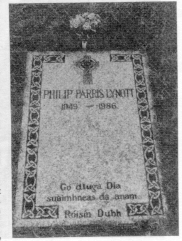
Many people planning to visit Ireland have written to ask me where Phil Lynott is buried and how they can get to the cemetery to visit his grave. Philip is buried in St. Fintan's cemetery in Sutton, County Dublin on the northeastern outskirts of the city about 8 miles from the centre. If you have your own transport you should take the Howth Road out of the city to Sutton Cross Roads where you turn right at the traffic lights into Greenfield Road. Drive straight on for about one mile and you will find the cemetery on your right.
 Perhaps
the easiest way to reach it by public transport is by taking the DART (suburban
electric railway) north from the city centre to Sutton station on the Howth
line. On leaving the station go to the left up Station Road and then straight
across the road junction at the traffic lights. Continue walking up the
hill and eventually you will see the cemetery on the right-hand-side of
the road. The total distance from the station is about a mile and a quarter
(2 km). There is a bus (88) that runs from Sutton station up this road
but the frequency of service means it's probably not worth waiting for.
 Alternatively
two bus routes from Abbey Street Lower in Dublin city centre (31 and 31A)
will bring you to the traffic lights at Sutton. The 31A actually travels
up the hill towards the cemetery part of the way before turning off to
the right. The bus will take considerably longer than the DART to reach
Sutton.
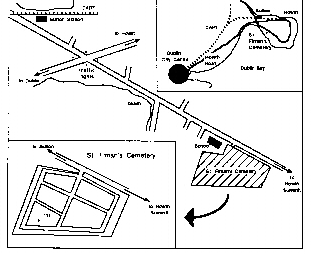
Enter the cemetery by the first gate and then walk straight across to the far side - its a pretty big place. Philip is buried in the last section on the right (called St. Polans) in row I plot 13. If you have trouble finding the grave the gardeners working in the cemetery are usually very helpful.
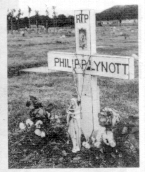
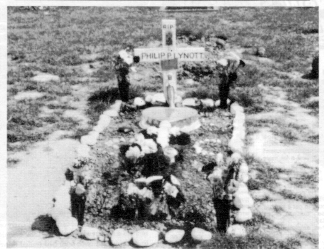
Originally the grave had an upstanding white cross and a lining of white stones somewhat in the style of a cowboy's grave. However the rules of the cemetery insist on all the plots being kept flat so, once the grave had settled, this was replaced by a memorial stone lying flush with the ground. The inscription can be translated as "May God give peace to his soul".
Thanks to the Black Rose homepage for the use of this article